Thrills, spills and last-ditch surges for the line
Snatches of colour from a week watching the World Athletics Championships in Tokyo

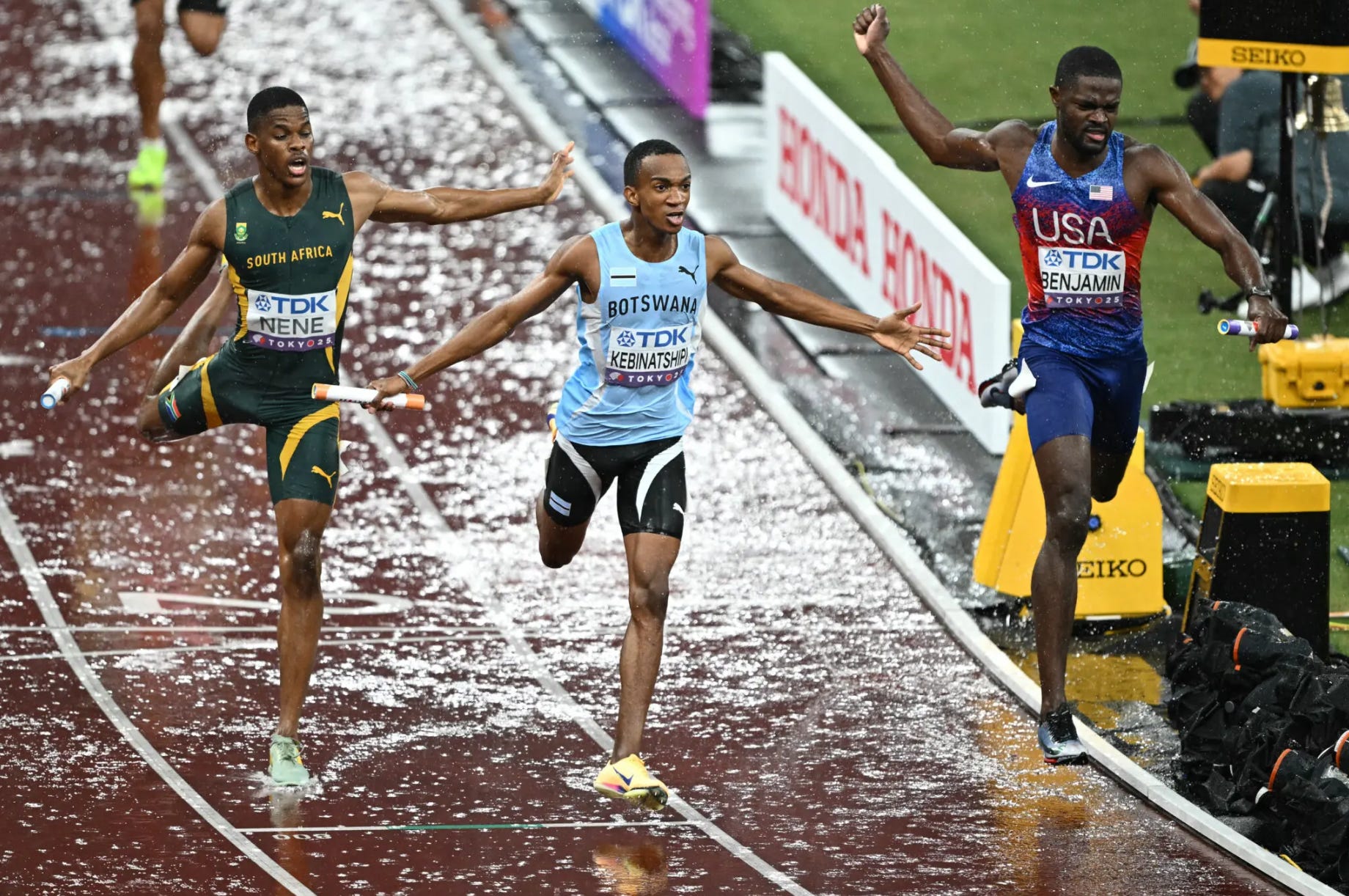
I need a lie down after that. All week I’ve been logging on to the BBC to watch the gladiators battling it out on the track at the World Athletics Championships in Tokyo. It has been a funny time. To me, this is the greatest sporting spectacle on earth, the best athletes in the world going head to head. Yet for most people I know, they barely even register that it’s happening.
So there I am, in a little world of my own, constantly bubbling up with emotion at the amazing powers of these athletes, at the effort, at the purity of this sport, the simplicity, the brutality of it all. It reminds me, yet again, of that interview with Sean Connery, when he was asked: “What makes you cry?”
He answered with one word: “Athletics.”
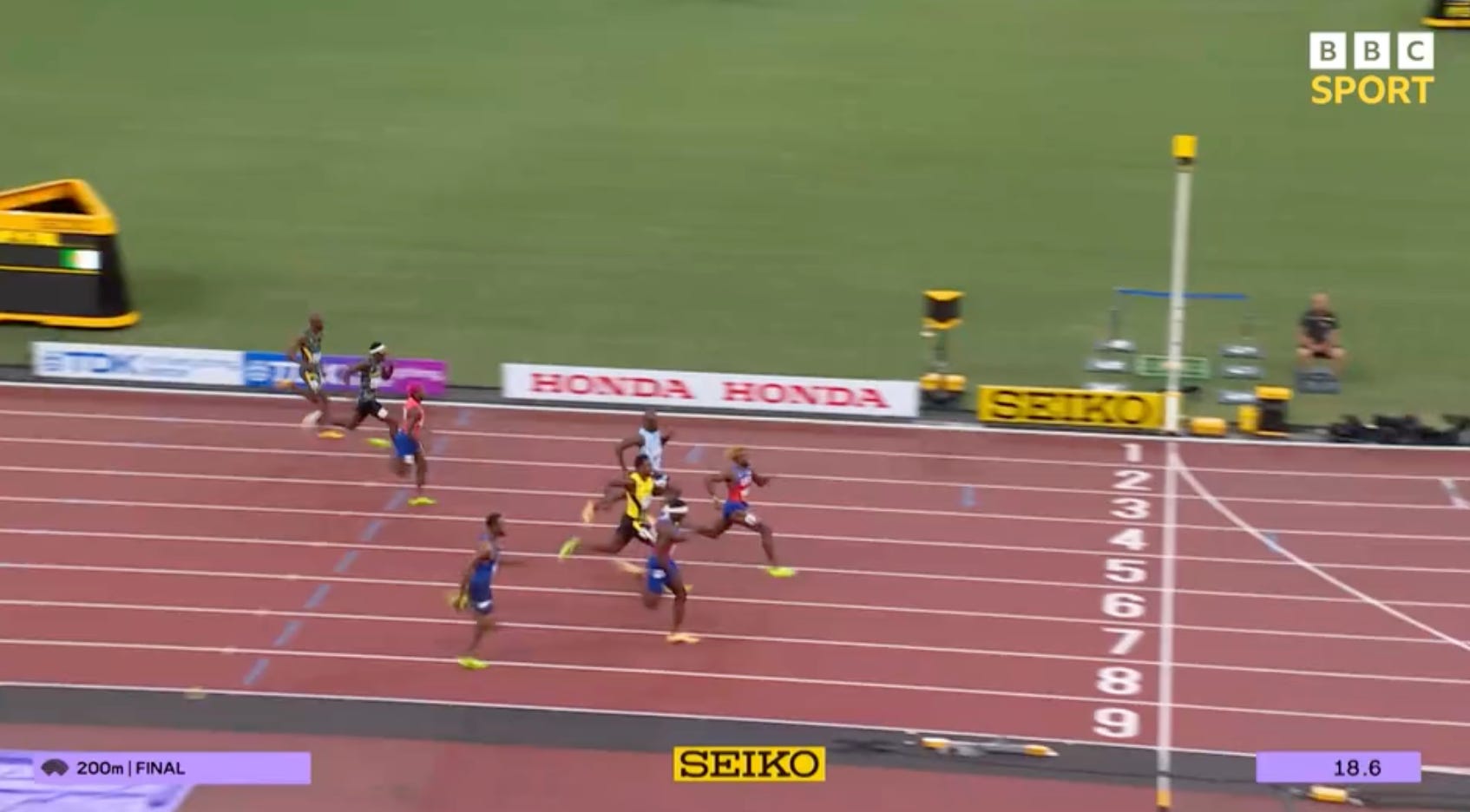
Of course, I’m primarily watching for the distance races, but the sprints are compelling too. That men’s 200m, for example, with Noah Lyles, blond hair billowing behind him like the manga character he aspires to be, rising from the depths to reclaim the world title. Wow.
The two 800m races were wild, with the pace lightning fast, flying out from the gun. A two-lap burn up, let’s go! Poor old Jess Hull (who doesn’t usually run 800m) didn’t know what had hit her, as Keely Hodgkinson and Mary Moraa blasted away at the front. She may have won bronze in the 1500m, but this was a different beast, a two-lap sprint, and by the end of the first lap she was miles behind.
The British women, Hodgkinson and Georgia Hunter-Bell, did everything they could, straining everything down that last straight, but it’s always easier to come from behind, and Lilian Odira from Kenya, who was only ranked 17th in the world, timed it to perfection.
In the men’s 800m, Emmanuel Wanyonyi risked a similar thing happening to him, as he lead from the start, but he just seems to be able to hold on to the lead by some incredible force of will that has everyone surging up behind him but never, quite, being able to pass him.
In the men’s 1500m, even without Josh Kerr - who pulled up injured - there were Brits in the mix again, showing that the middle distance legacy of Coe, Ovett and Cram lives on still. Good old Jake Wightman - who doesn’t love Jake Wightman? - looked like he was going to do it again, surging like he couldn’t quite believe it himself with 200m to go and hitting the front.
But Isaac Nader of Portugal timed it better this time. It’s a lottery really. Nobody plans to sit in second position until the last 20 metres and then go for it, even though that works so often. Why not? Because you can’t plan for that last-second power surge, that final summoning of some dark, mystical speed spirit that rises from nowhere, unexpectedly, to fling you across the line. You just have to be in the right vicinity, giving it everything, and then hope that somehow that bolt of divine intervention strikes you.
Geordie Beamish felt it off the final barrier of the 3000m steeplechase. Suddenly he could see it, the line, the runner in front off him tiring, the portal to victory opening up for a split second. And he grabbed it.
Keep reading with a 7-day free trial
Subscribe to Monday Musings to keep reading this post and get 7 days of free access to the full post archives.